




How to build a useful contact database for your merchandise business

A customer ordered conference bags last year. Who handled the order? When is their next event? Can you send them product ideas, or did they only ask for a quote?
Your contact database should help you answer those questions.
For a merchandise distributor working in the EU, keeping good records also means understanding how you can use them. GDPR governs your handling of personal data. National laws implementing the ePrivacy Directive govern marketing emails, with differences between countries, particularly for business contacts. You need to check both.
Start with the contacts you already have
Review your customer and enquiry records before collecting more names.
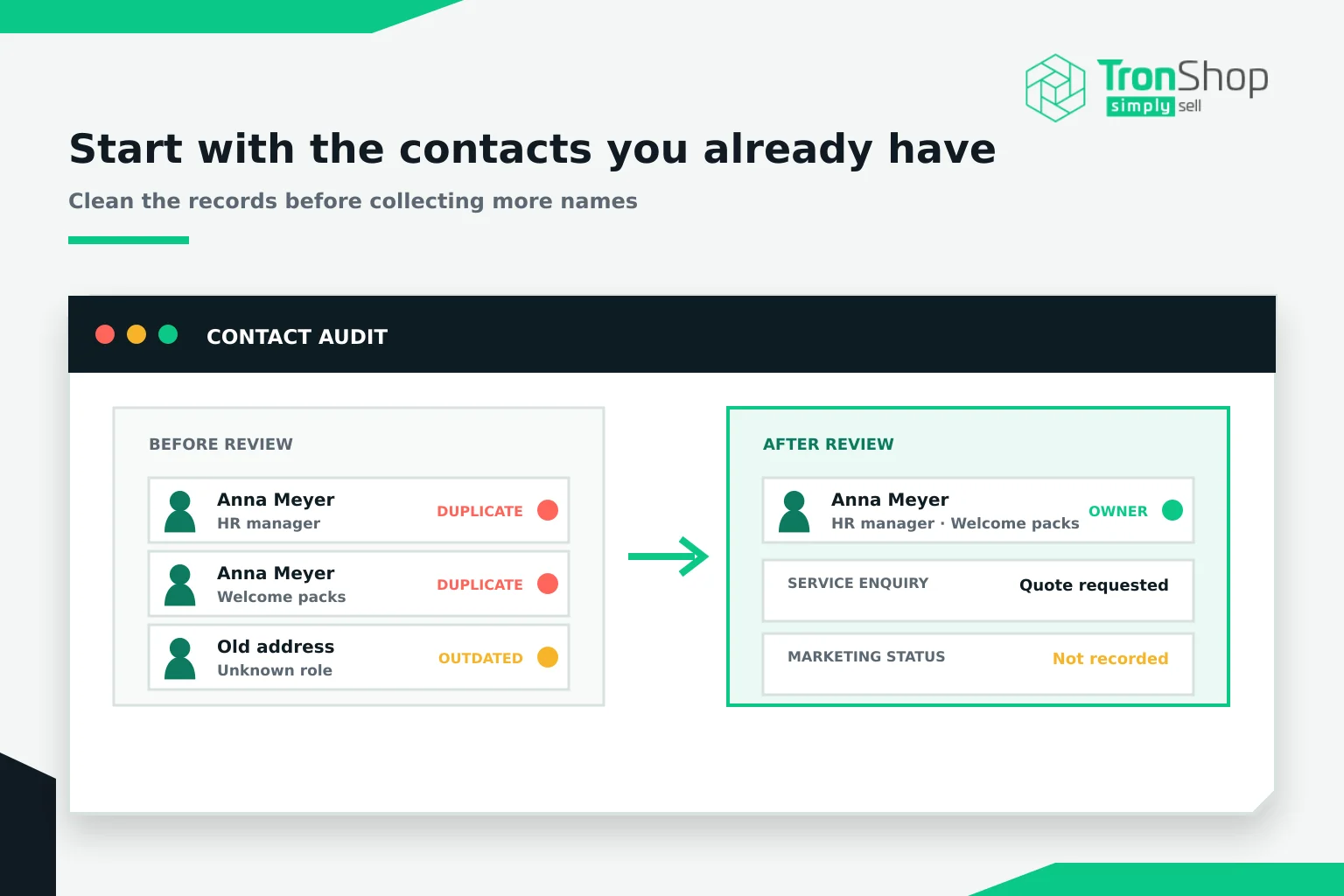
Remove duplicates, check outdated details and assign someone to manage each relationship. One company might have an HR manager ordering welcome packs and a marketing manager buying exhibition giveaways. Keep their responsibilities clear so your team knows whom to approach about each job.
Separate service enquiries from marketing subscriptions, too. Someone requesting a quote for 500 umbrellas expects an answer about that order. The request does not automatically mean they have consented to your newsletter.
Give people a clear reason to subscribe
“Subscribe for updates” tells a buyer very little.
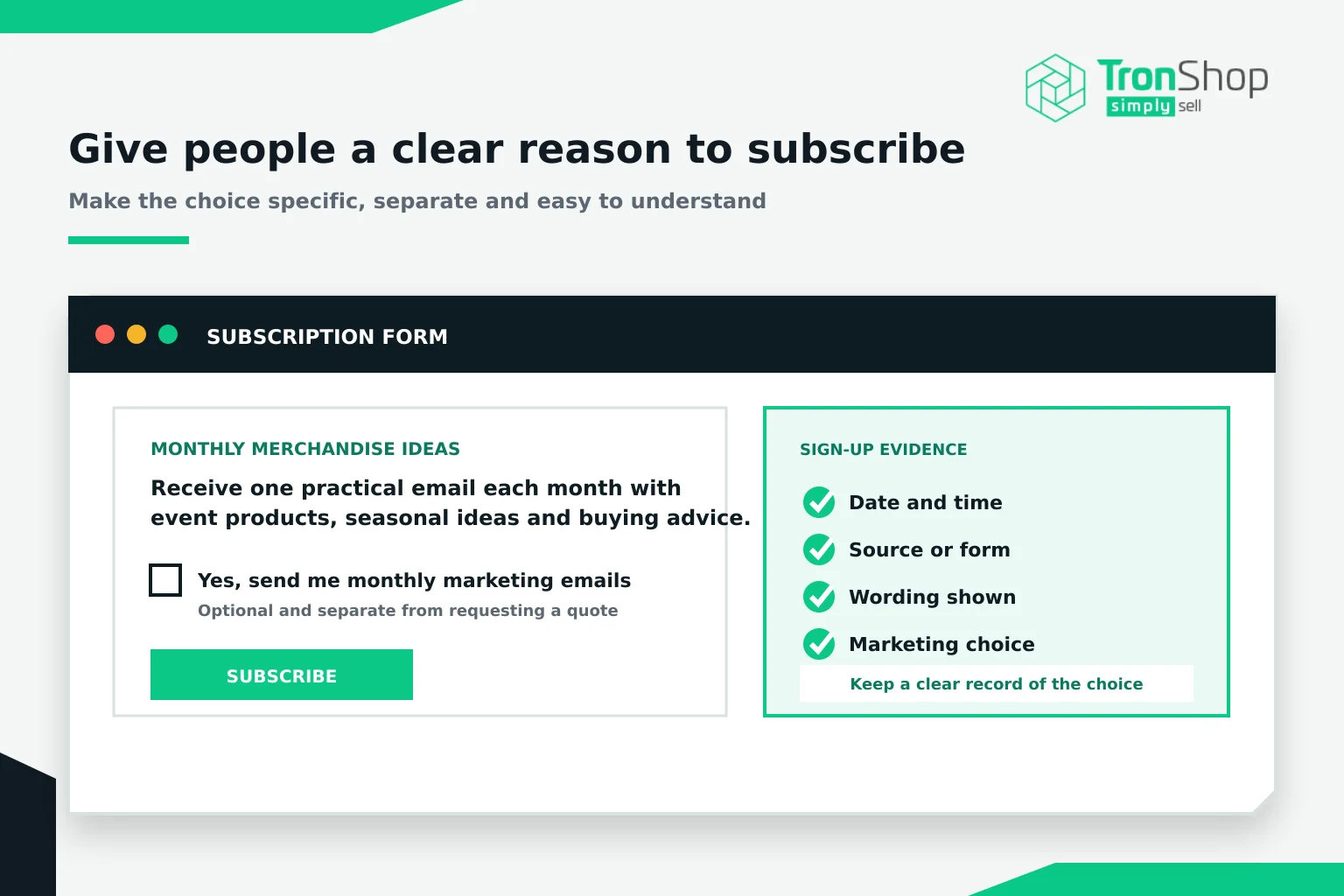
Explain what you’ll send. That might be a monthly selection of event merchandise, practical advice on branded clothing or reminders to plan seasonal gifts.
If you rely on consent, make subscribing a genuine choice. Use a clear, unticked box, separate from accepting terms or requesting a quote. People must understand what they’re agreeing to and be able to withdraw their consent without a disadvantage.
At an exhibition, ask whether someone wants a quotation, marketing updates or both. Don’t treat a badge scan as agreement to every future campaign.
Keep evidence of the sign-up, including the date, source and wording shown. A confirmation email, often called double opt-in, can help verify the address and document the process. It cannot fix an unclear consent request.
Keep records that help your team follow up
Imagine a colleague taking over an enquiry while you’re away.
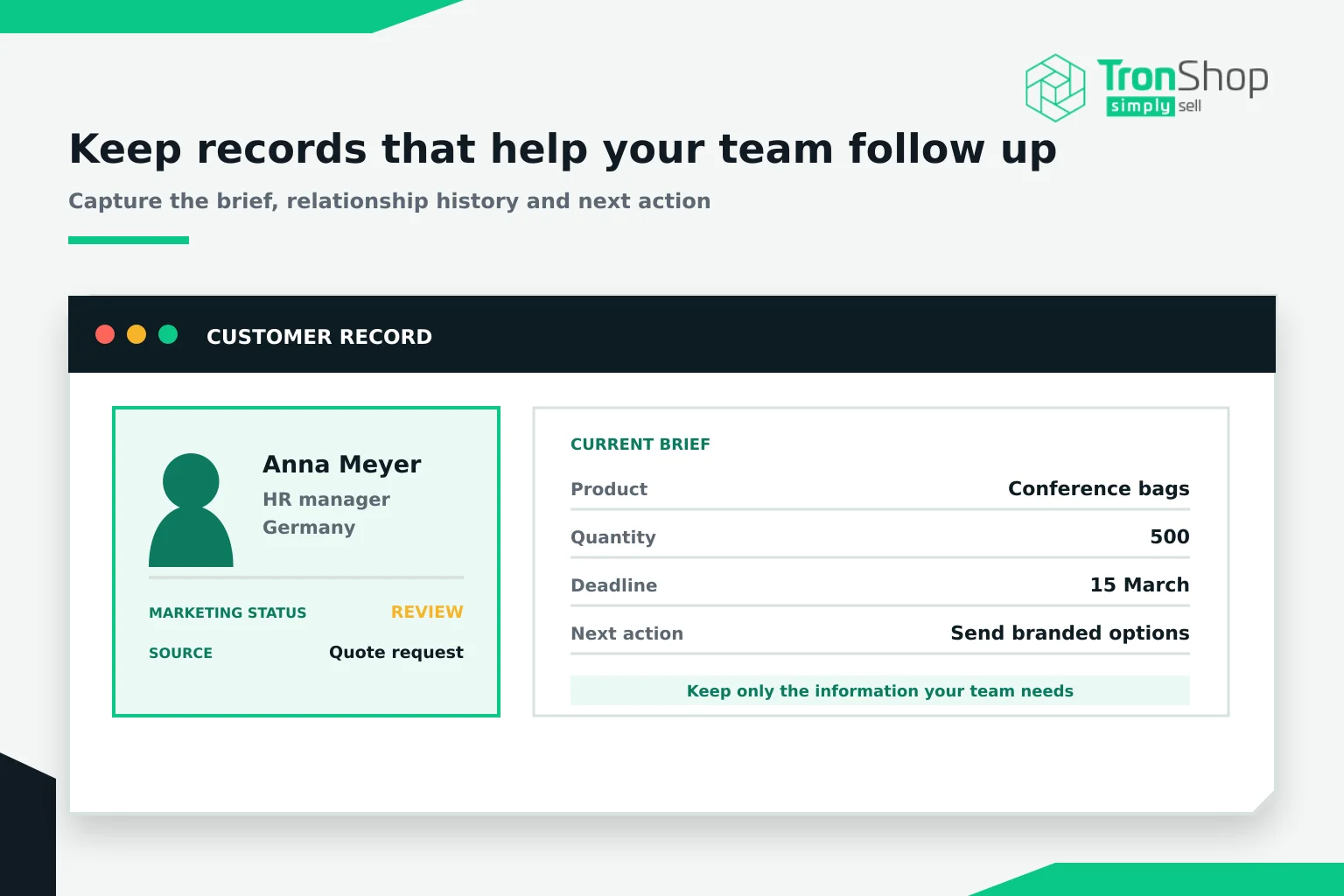
They need the customer’s request, quantity, deadline and next action. They probably don’t need unrelated personal details.
Useful contact fields include the company, business contact details, relevant role, country, source and collection date. Record buying interests when you actually know them. A single notebook order is not enough to assume someone wants every stationery promotion.
Keep the marketing status separate and record the lawful basis you rely on for processing personal data. GDPR requires your records to be relevant, accurate and limited to what you need.
PromoTron connects supplier and product data to support your sales work. Your contact database adds the customer’s brief and relationship history. If you want to exchange customer or enquiry information between TronShop and another system, check the integration scope and data permissions for your setup.
Check the rules before sending marketing
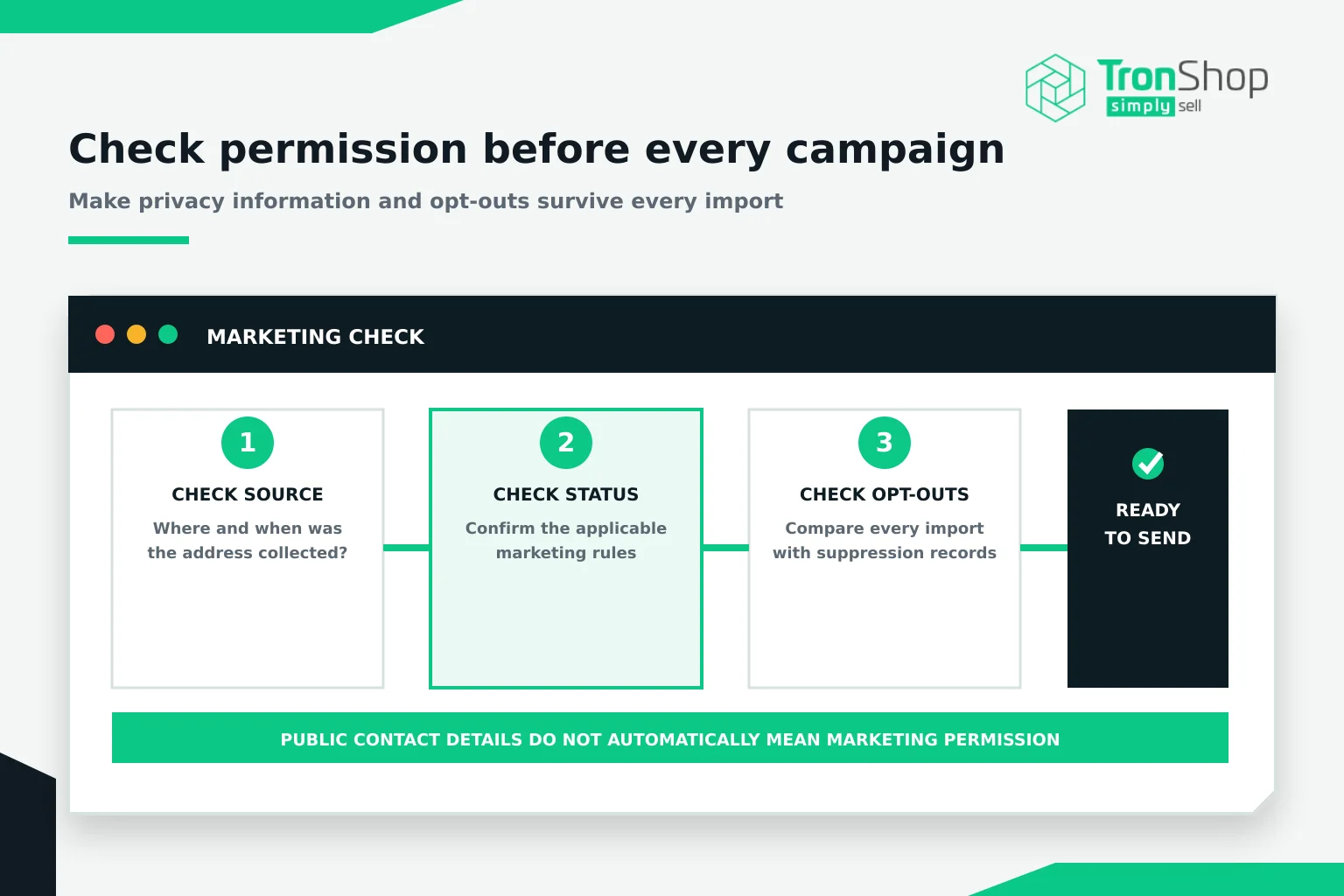
An email address on a company website is not evidence of consent.
Public directories can help you research potential customers, but finding someone’s details and being allowed to send them marketing are separate questions.
You need an appropriate GDPR lawful basis for processing personal data and must meet the applicable national email marketing rules. Legitimate interests may support some processing, but it does not override a requirement for consent to send an email.
Business-to-business rules vary across EU countries. Don’t assume an approach permitted in one market is permitted in another.
Existing customer relationships can allow limited marketing of your own similar products or services under an exception, subject to conditions such as offering an easy opt-out when collecting the address and in every message. Check the national requirements before relying on it.
Explain how you use the information
Put a clear privacy notice beside your collection form. It should explain who you are, why you need the information, your lawful basis, retention arrangements and the person’s rights, alongside the other required details.
If you obtain personal data from another source, transparency duties still apply. Generally, provide the required information within one month, or by your first communication if that happens sooner. Identify the source as well. Exceptions exist, but don’t assume they apply to a prospect list.
Be careful with purchased databases. Ask for evidence of how the information was collected, what people were told and whether your intended use is lawful. “GDPR compliant” on a seller’s website does not answer those questions.
Make opt-outs survive the next import
When someone objects to the use of their personal data for direct marketing, stop that use. Make the right to object clear by your first marketing communication at the latest.
Simply deleting an address from one campaign list can let it return through an older spreadsheet. Keep a restricted suppression record containing only what you need to prevent further marketing, and check new imports against it.
Limit access to colleagues who need the database. Set retention periods based on your purpose, review old records and remove information you no longer need.
Audit your existing contacts for accuracy, source and marketing status before adding more names.