




How to improve SEO for a promotional products webshop

A buyer searches for “branded notebooks for a conference”. If your shop has a suitable range, you want them to find it and understand what you can offer.
That’s the job of search engine optimisation, or SEO. You make your pages easier for search engines to find and understand, while giving buyers useful answers when they arrive.
Start with the products you know best.
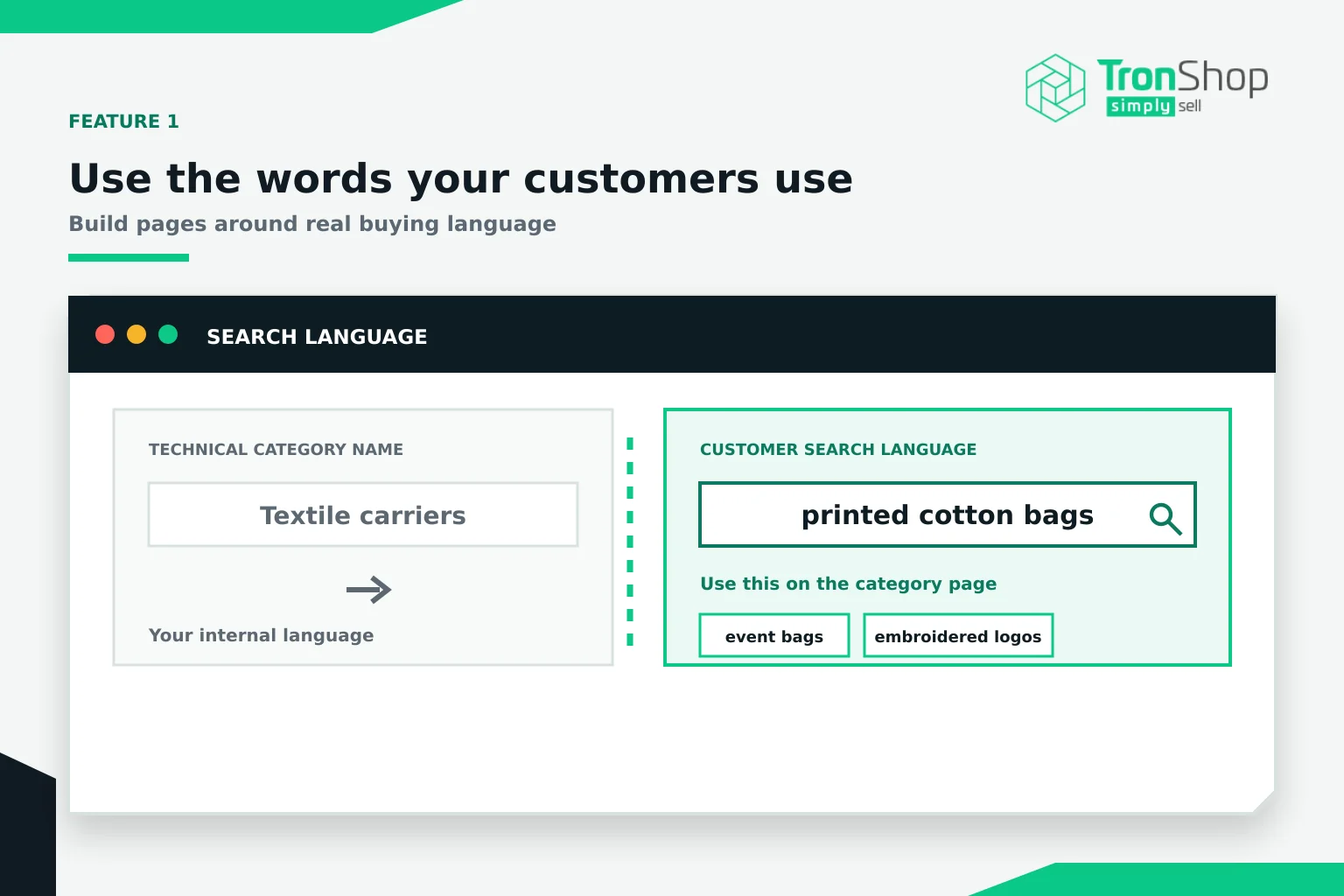
Use the words your customers use
Your enquiry inbox is a good place to look for ideas.
Do customers ask for “printed cotton bags” while your category is called “textile carriers”? Use language they recognise. You can keep the technical details in the product description.
Look for questions that come up repeatedly, too. “Can you embroider this logo?” could become a guide to preparing artwork for embroidered clothing. “What can we give away at an exhibition?” could lead to a category page with a carefully chosen range and practical buying advice.
Give each page a clear job. A category helps someone compare products. A guide helps them understand a decision.
Avoid creating multiple pages that say almost the same thing with a different town or keyword inserted. If you serve a particular area, explain something useful about your service there.
Add the advice you would give in person
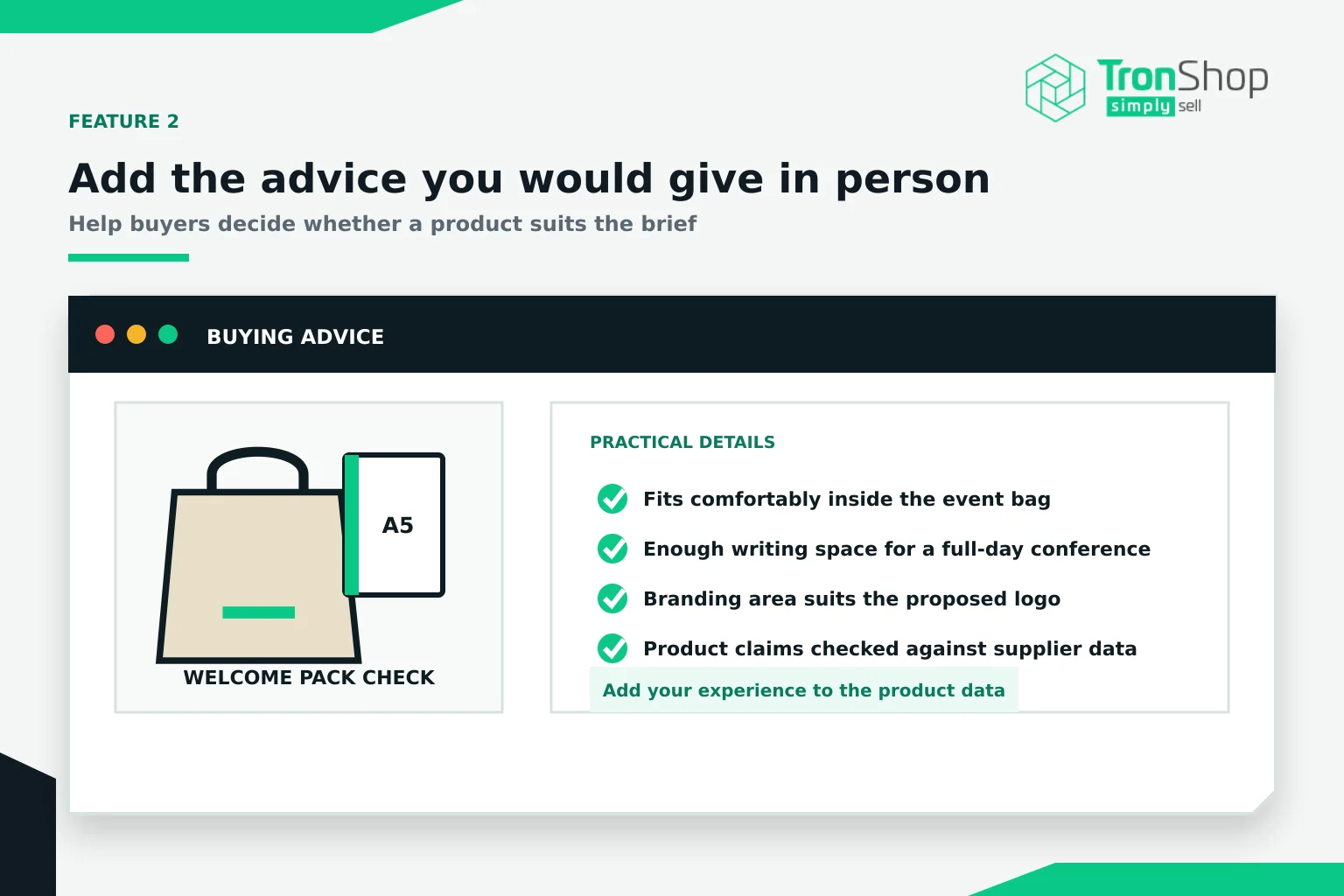
Supplier descriptions tell buyers what a product is. Your experience can help them decide whether it suits their brief.
Take a notebook. The dimensions and cover material matter, but so might whether it fits inside the event bag they’ve chosen or offers enough writing space for a full-day conference.
For clothing, explain the details buyers should check before ordering, such as sizing and whether the proposed decoration suits the fabric. If an answer depends on the logo or product, say so.
Be precise with environmental claims. If the supplier documents recycled content, use that information accurately. Calling something “sustainable” without an explanation gives the buyer little to assess.
You don’t need to rewrite thousands of listings. Begin with a category you want to sell more of and the products your team regularly recommends.
Make your shop easy to navigate
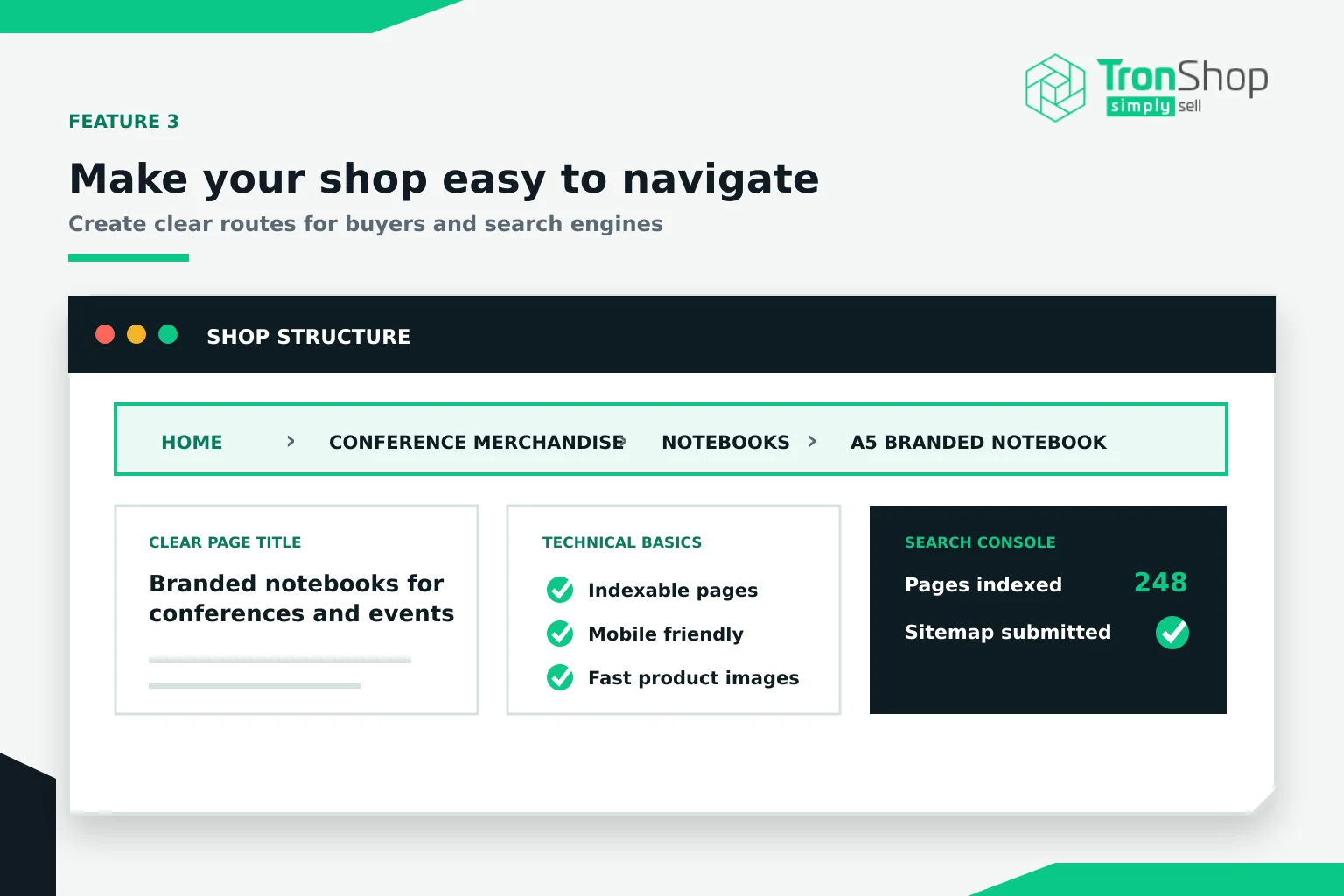
A customer should be able to move from your homepage to a category and then to a product without guessing where to click.
Search engines need routes through the shop, too. Link to products from category pages rather than making them accessible only through your search box.
Give important pages descriptive titles and clear headings. “Branded notebooks for conferences and events” tells a visitor more than “Our products”. Write a short page description that explains what they’ll find, without squeezing the same phrase into every sentence.
Add useful alternative text to meaningful images so people using screen readers can understand them. Describe what the image shows; avoid filling it with keywords.
Then check the technical basics with your website provider. Can important pages be indexed? Does the shop work properly on a phone? Do large images slow it down?
Use Google Search Console to investigate indexing problems and submit your sitemap. A sitemap helps Google discover pages. It doesn’t guarantee that every page will appear in search results.
Check what your prices actually describe
Promotional product pricing needs care.
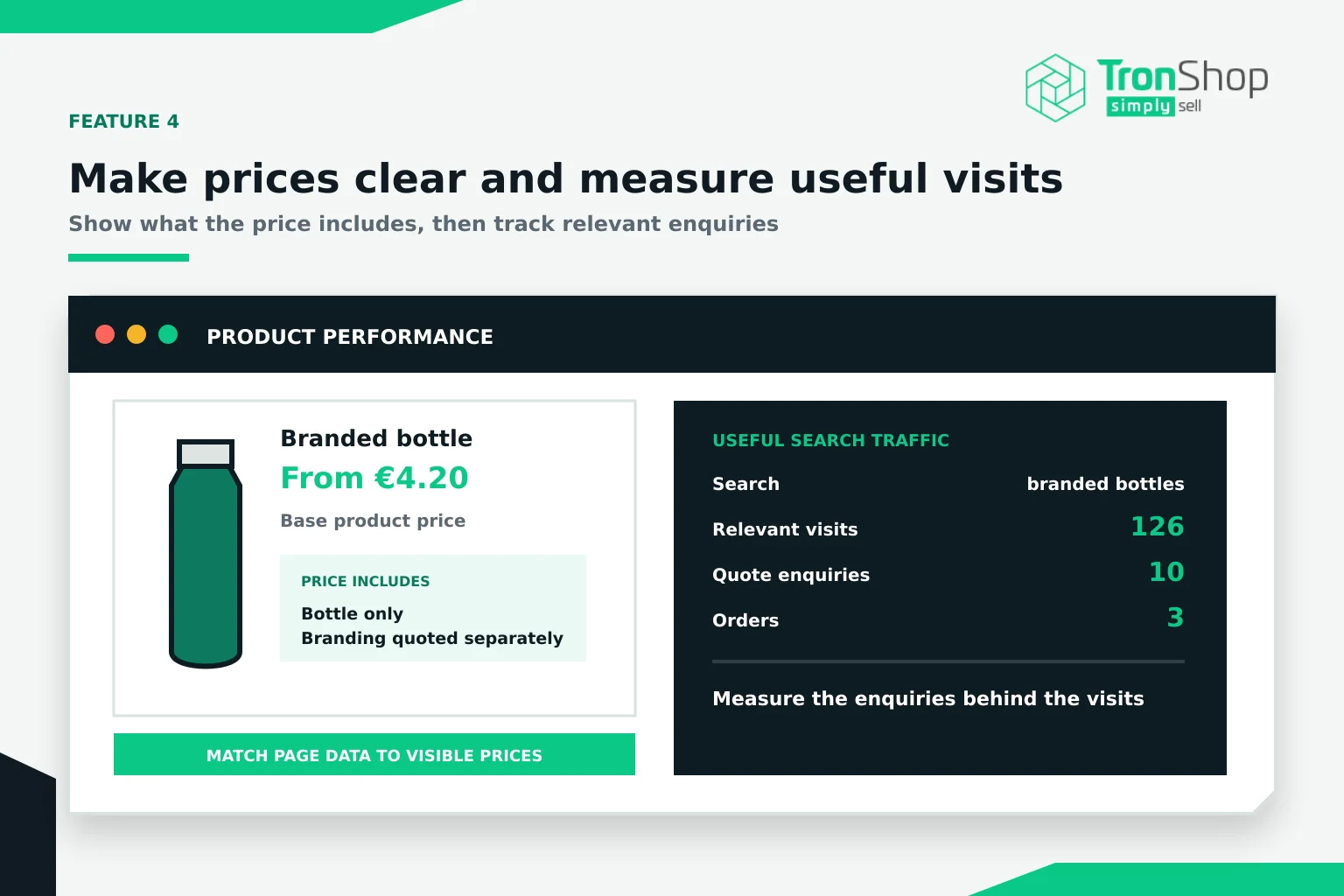
A bottle might cost one amount without branding and another with a two-colour print, depending on quantity. If the page shows a base price, make that clear. A buyer should not have to reach the quote stage to discover what it excludes.
Ask your website provider about structured data. This is information in the page code that helps search engines interpret details such as products and offers. It should match what customers see, and the appropriate setup depends partly on whether they can buy directly or need to request a quote. It does not guarantee an enhanced search listing.
TronShop brings standardised data from connected suppliers into your catalogue, reducing the need to assemble product information from separate files. You can then add the guidance that reflects your customers, your service and the jobs you handle.
Look at the enquiries behind the visits
More traffic is useful when it brings the right buyers.
Use Search Console to see which searches bring people to your pages. Compare that with the enquiries your team receives. Are visitors looking for the branded products you supply, or arriving for something outside your range?
A page bringing ten relevant quote requests may be more useful than one attracting hundreds of visitors who never enquire.
Review your results regularly, but give changes time. A monthly check is a workable routine; it is not a deadline by which SEO improvements should produce results. Some changes take longer, and seasonal demand can affect the comparison.
Choose one important category this week and improve its buying advice, page title and links.